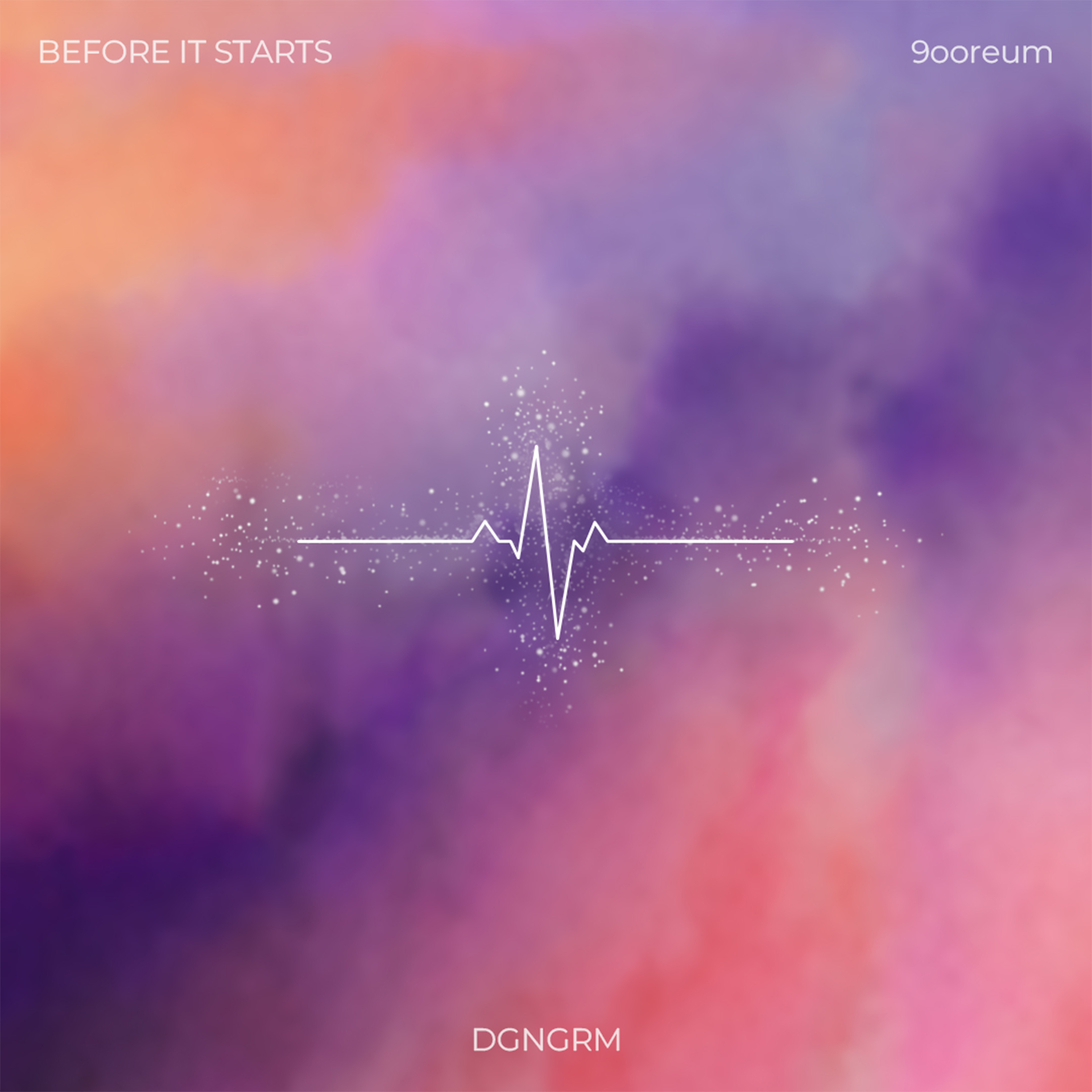
Lyric Note 01 — DGNGRM
When I chose the word “heartbeat” as the song’s key idea, two things came to mind: the heart, the physical source of the beating, and excitement, the emotion that makes it race.
Perhaps excitement is what we feel when we begin to like someone. But rather than having the narrator simply say, “I’m trembling because I like this person,” I wanted to follow someone asking, “Why is my heart shaking and beating like this?” The purest kind of heartbeat, to me, is the moment the heart moves before the mind understands.
That is why I set the song not in a private moment between two people, but in a place filled with others. In the middle of everyone laughing and talking, one person alone keeps catching the narrator’s eye. I wanted to portray that unconscious moment of becoming more aware of someone—and the narrator’s desire to hide the heartbeat it creates.
As day crosses into night, the feeling begins to ripen. The narrator thinks trying to calm down will help, but the heartbeat only grows stronger. “My heartbeat becomes clearer,” and the narrator’s eyes are almost fixed on that person. Then their eyes finally meet, and the narrator’s mind goes completely blank. What if all of these feelings—the excitement, the heartbeat—have been revealed? It is unbearably embarrassing.
But when the other person sees that awkwardness and answers with their brightest smile, the narrator realizes this feeling may not be theirs alone. It is the moment excitement turns into joy.
The narrator asks, “Are you trembling like me?” Then comes “a brief spark when our fingertips brush”—the point where uncertainty begins to feel like conviction.
In the final chorus, the narrator realizes that perhaps they have liked each other all along. After spending the whole day stiff and nervous, the narrator finally begins to smile brightly.
“DGNGRM” is a song about realizing that you have fallen for someone, and perhaps realizing that they feel the same. Still, I wanted to avoid giving the narrator certainty too quickly. I wanted the excitement to keep growing through the narrator’s own realization. Rather than the explosion of a definitive answer, I hoped an unbearable, ticklish feeling would lead the song’s mood. That is why there is no confession from “you,” even at the end.
It may have been only the narrator’s misunderstanding, a passing breeze, or something genuinely shared. But that does not matter. The heartbeat felt in that moment was real.